
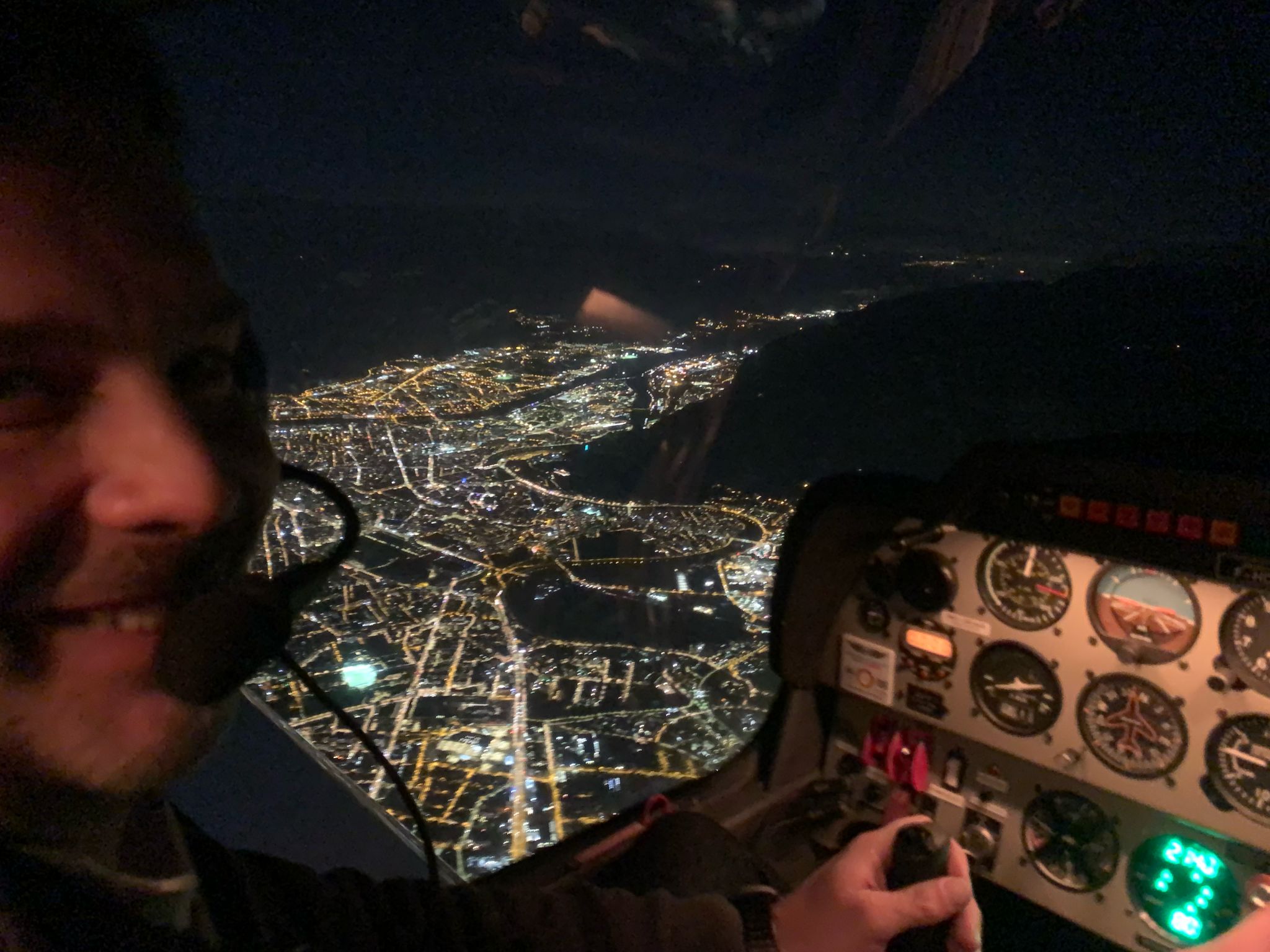
Night flying
Training
objectives
The aim of this training is to acquire the technical and non-technical skills needed to fly safely at night.
Technical skills
Flying skills:
- flying by sole reference to instruments (basic T, attitude indicator)
- performing manoeuvres (level flight, climbs, descents and associated turns)
- landing at night, including without lighting and without flaps
- recognising and recovering from unusual attitudes
- handling an engine failure before take-off, in the initial climb and en route.
Accurately following flight paths…
- for joining an aerodrome and its circuit
- for “night VFR” routes
- landing aids (PAPI, ILS, RNAV (GNSS)…).
Managing the aeroplane's mechanical, avionics and automatic systems when manoeuvring at night.
Handling the associated significant failures, including:
- Engine failure
- Electrical failure
- Lighting failure (inside or outside)
- Radio failure, together with the issues of the STAP (automatic parameter transmission system) and PCL (Pilot Controlled Lighting).
Applying the appropriate procedures and checklists in night flight.
Applying the knowledge associated with night flying, including:
- the minimum equipment required
- preparing a night flight, including alternates and fuel load
- the rules for, and practical use of, STAP and PCL
- minimum safe altitude
- the route that can be used at night (exemption from overflight rules).
Applying the knowledge associated with flight without visual references, including IMC conditions and minimum safe altitude.
Non-technical skills
Making normal and emergency calls in case of inadvertent flight into IMC.
Managing your workload to keep an acceptable margin of resources for unforeseen situations, through anticipation, working methods and prioritising according to each phase of flight.
Managing automation and navigation aids (especially the GPS route).
Maintaining situational awareness and managing collision avoidance…
- with respect to other traffic (awareness of IFR flight paths)
- with respect to terrain and obstacles, with the concepts of minimum safe altitude and the dangers of CFIT (Controlled Flight Into Terrain).
Assessing weather conditions and how they change in real time. Taking forced-landing options into account.
Making the right decisions within a reasonable time when flying without visual references, and the actions to regain VMC.