Mountain flying
Mountain flying
on skis
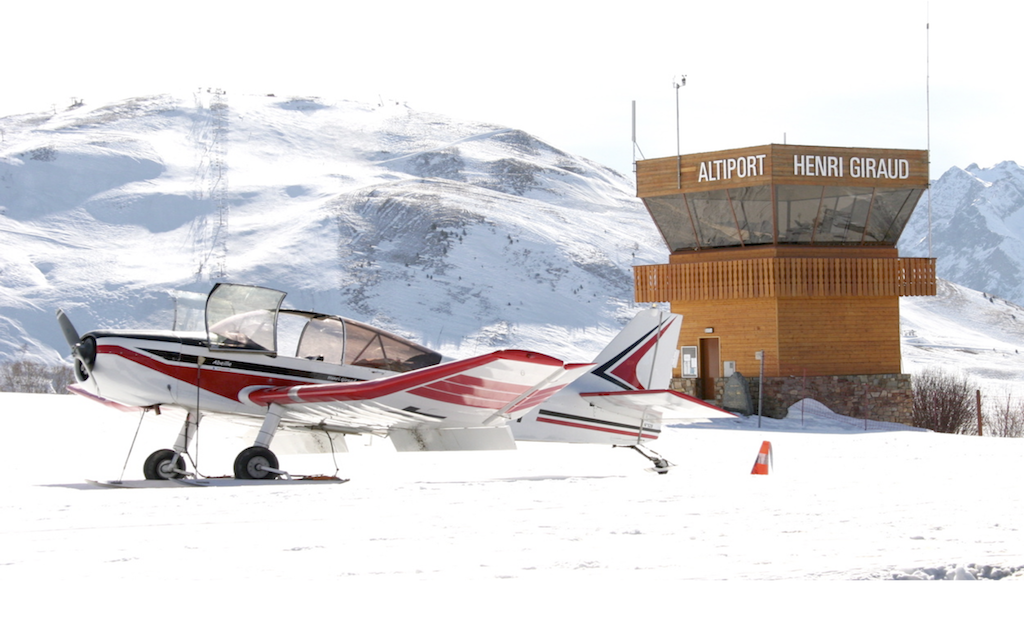
The snow rating takes a little time, because there are many more things to take into account than on wheels.
For example, you have to remember to “switch to skis” when you reach the mountains, and conversely to “switch to wheels” on the way back down. A good idea is to do it, in either direction, at the snow line. Otherwise, arriving at Le Versoud, you burn the soles of the skis – hello repairs. Conversely, if you land on snow on wheels, you may well kiss the windscreen, but above all the aeroplane stops very low on the slope, and to take off again you will have to drag it all the way up. At 3,000 m you soon run out of breath…
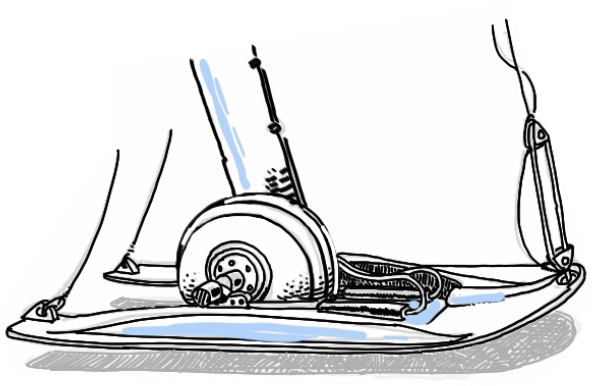
An aeroplane on skis has no brakes; if you manoeuvre a little fast when arriving on a strip, you risk wrecking parked aircraft. On the ground you can only turn by blowing the fin with the propwash, nothing like pivoting on the spot with one wheel locked on tarmac. If you stop on a slope, not sufficiently across it, the aeroplane will start moving again. Forwards is not too bad. Backwards is a nuisance. And even when it seems settled, the rising temperature during the day can free it. Remember to drive a shovel, handle first, against the inside edge of the uphill ski, or against the outside edge of the downhill ski (less stable, but easier to clear when leaving)…
If the snow is cold, or gets colder while you are stopped, you will need to rock the aeroplane a little when starting up (engine, shifting your weight, elevator) to unstick the skis from the snow. Some snow conditions (very cold, wind-blown or a bit slushy) slow the slide; take this into account with the throttle on landing, and for the take-off distance too. If the snow is deep and powdery, the skis will tend to dig in: manoeuvre with the stick fully back. Avoid landing outside existing tracks right after a heavy snowfall. On take-off, not too much back stick, as it pushes the tailwheel in and acts as a brake. All these snow factors are judged by taking into account the weather over a whole season, recent snowfalls, sunshine on the previous days, the air temperature, and the wind conditions beforehand and on the day of the flight.
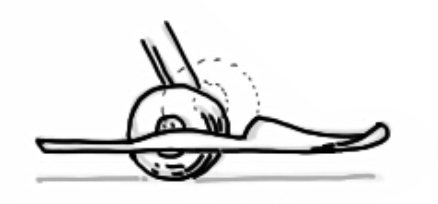
dry runway

But all this is learnt with… our flight school.
Credit: Bernard Moro
Sharing the slopes
with skiers
collision risks. In recent years, conflicts between skiers and mountain pilots on mountain airstrips and glaciers…
Crevasse
risks
How crevasses close up at the start of the season. The process is illustrated by 3 photos of the Girose glacier, where…