Aéro-Club du Dauphiné
Mountain
flying
We are very close to the Alps; in fact we are in the Alps: a wonderful playground. So it is tempting for our lowland pilots to go and have a look. Mountain flying, however, is not to be taken lightly. Before venturing there, take the time to spend an hour flying over Belledonne, in the left-hand seat with an instructor, or watching an experienced pilot from the right-hand seat. Take a look at our flight school's mountain flying training courses.
Advice for lowland pilots
Aerology
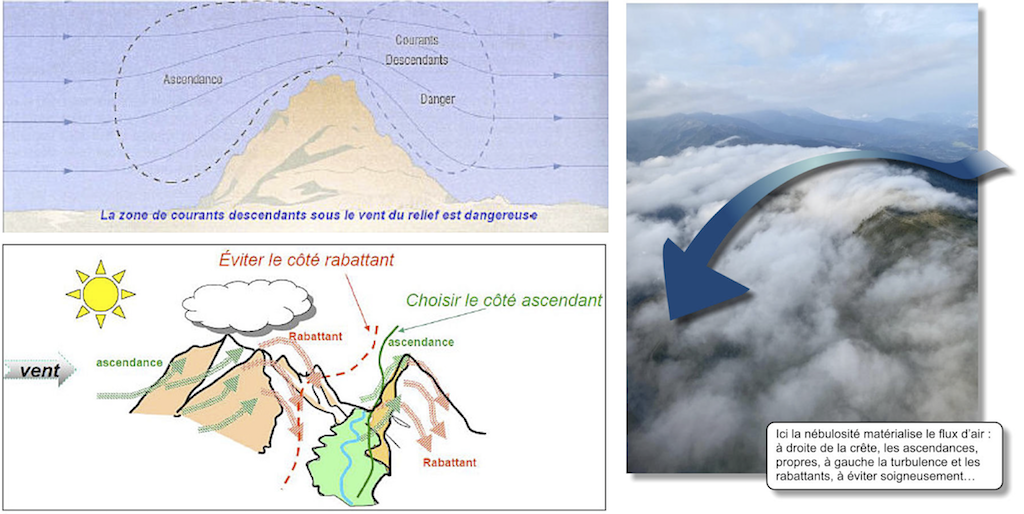
Any relief disturbs the airflow, even when it is weak. On the windward and sunny side of the relief you will find updraughts; it is pleasant and helps you climb. But inevitably, on the lee side of the same relief you will find downdraughts and rotor turbulence which at best stop the aeroplane climbing and at worst make it drop. Updraughts and downdraughts can help or prevent any gain in altitude. When the slopes close in on you, even with little wind, the airflow accelerates through the Venturi effect. Take this into account to anticipate the space needed for any manoeuvre. Over a mountain massif, even in fairly light wind, ridges that are not necessarily parallel will create complex aerological phenomena.
External references
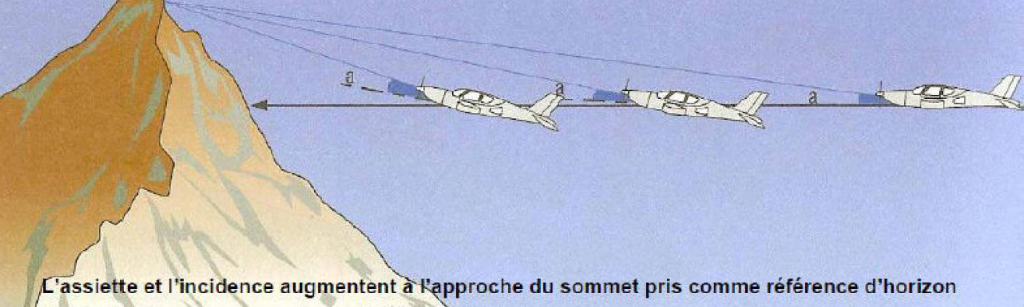
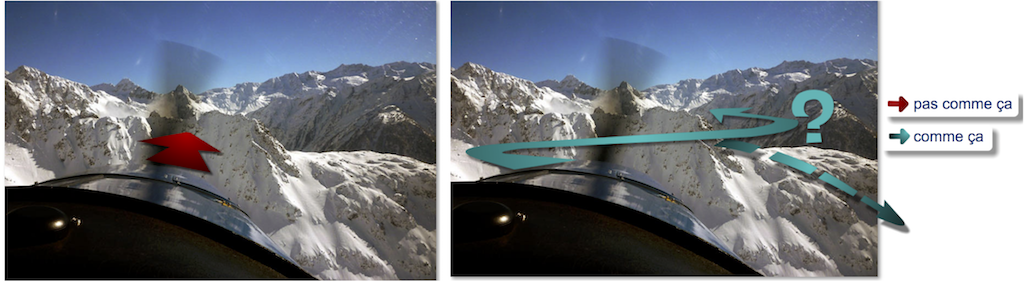
Heading upslope, the novice pilot tends to pitch the nose up to keep a fixed reference on the cowling. Result: loss of airspeed!
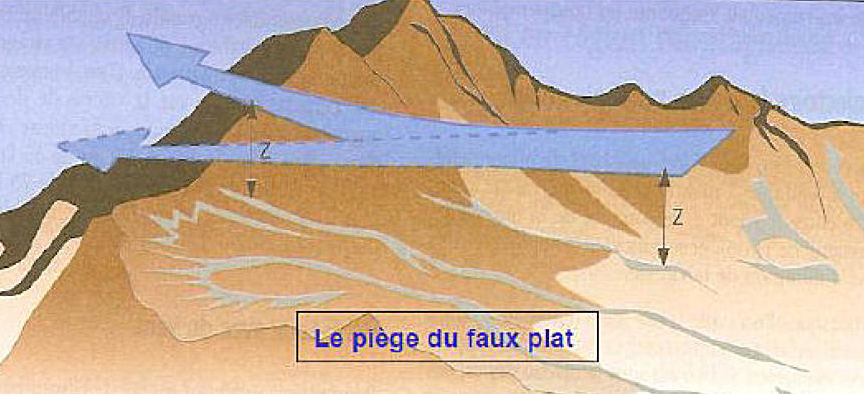
Sloping plateau, gentle rise, false horizon
Flying low while climbing up a slope or a valley = DANGER.
The slope may be steeper than the aeroplane's climb rate. The aircraft's performance is then not enough to climb, or to cope with and fight the turbulence.
When flying over a mountain plateau, you instinctively keep the aeroplane's height above the ground constant. In the mountains, plateaus often rise gently, or even climb. Without realising it, the pilot starts climbing too, the airspeed falls, so does the height, the angle of attack gradually increases, and by the time the pilot grasps the situation and tries to escape, there is no longer enough room or altitude to do so.
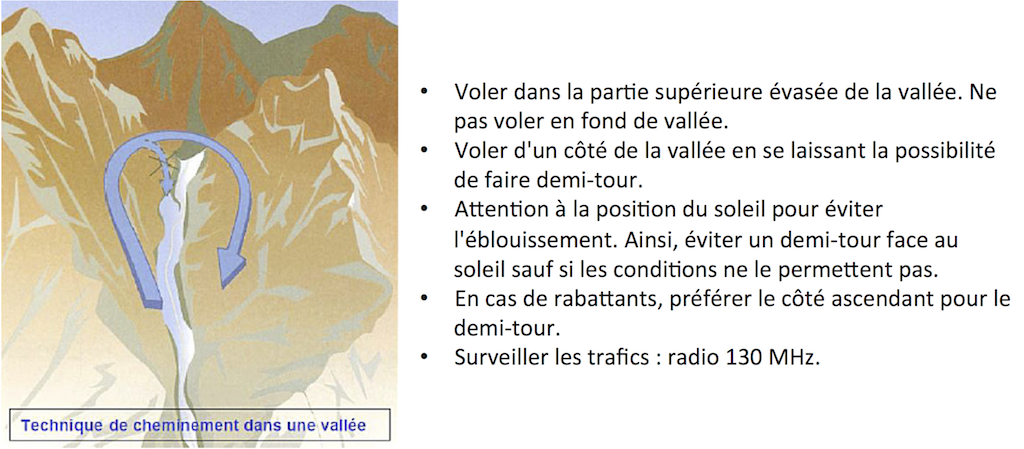
Following a valley
When flying along a valley, never stay in the middle, but keep close to one side or the other so that you have enough room to turn back if necessary.
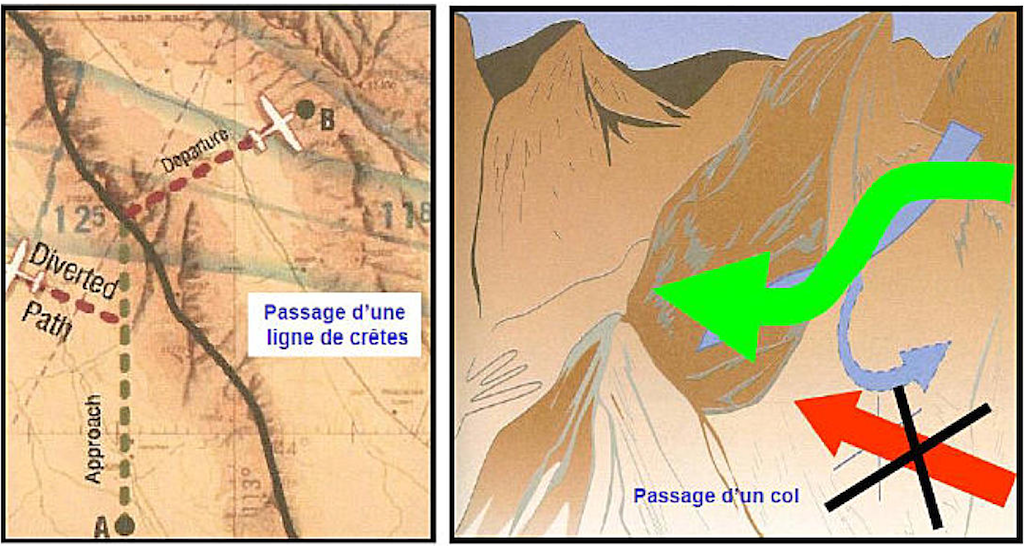
Crossing a pass
A pass is never crossed perpendicular to the ridge, because if you meet a downdraught head-on you fly straight into the terrain… so the idea is to run alongside the ridge line while climbing until you are above the level of the pass.
- Basic principle: keep sufficient margins on at least 2 of the following 3 parameters: height (Z), indicated airspeed (Vi), power, with Z > 500 ft above the ground minimum.
- Always leave yourself the option of turning back.
- If the aerology says no, go back down on the same side, make a turn to gain more altitude, and so on until you are well above the pass, which you always cross at an angle, then tip over to the other side. Always leave yourself the option of turning back.
- If there is a problem (cloud, turbulence, downdraughts, mechanical trouble, etc.): turning back must always be possible, with the shortest possible turn.
Altitude
Mont Blanc is very close, 1 h 45 of flying, and very tempting too. But on top of everything described above, there is the question of hypoxia at high altitude, which reduces cognitive abilities. So you need an oxygen bottle above 13,000 ft. Compulsory. And the engine, unless it is turbocharged, also struggles to breathe. A 180 hp Mousquetaire has barely half of that left at the altitude of Mont Blanc. Manoeuvre very gently… Finally, this particular mountain has strict rules on transit. It is busy, with aeroplanes and helicopters. The ACD has set up an instruction and certification procedure for flights over the massif, which lets you become familiar with the established routes. Don't take friends up there without knowing them.
But the simplest thing is to get your mountain ratings, isn't it?
Credits: Bernard Moro
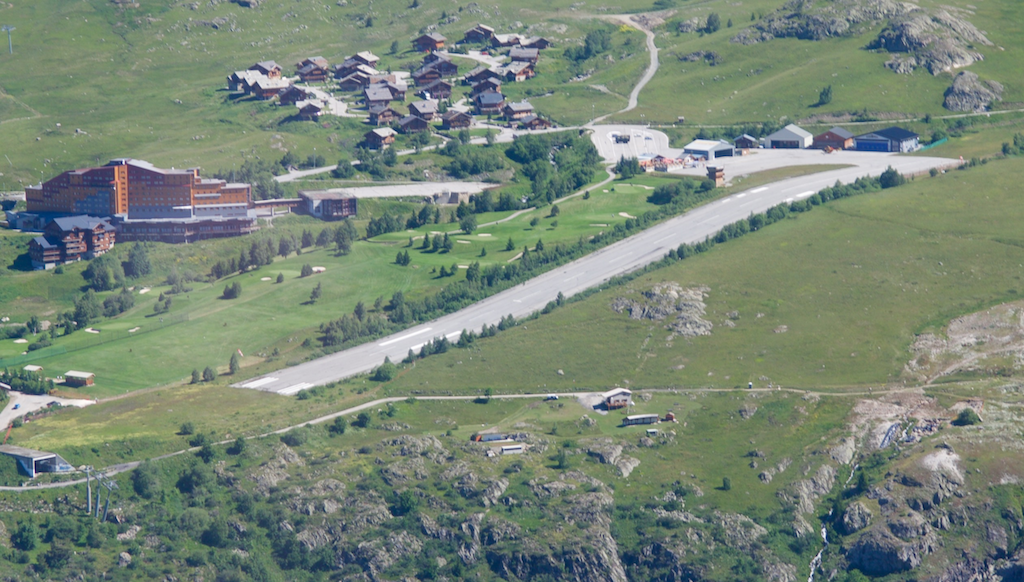
Altiports
An altiport is an aerodrome for aeroplanes and helicopters, usually high in the mountains, whose runways have the particular feature of being…
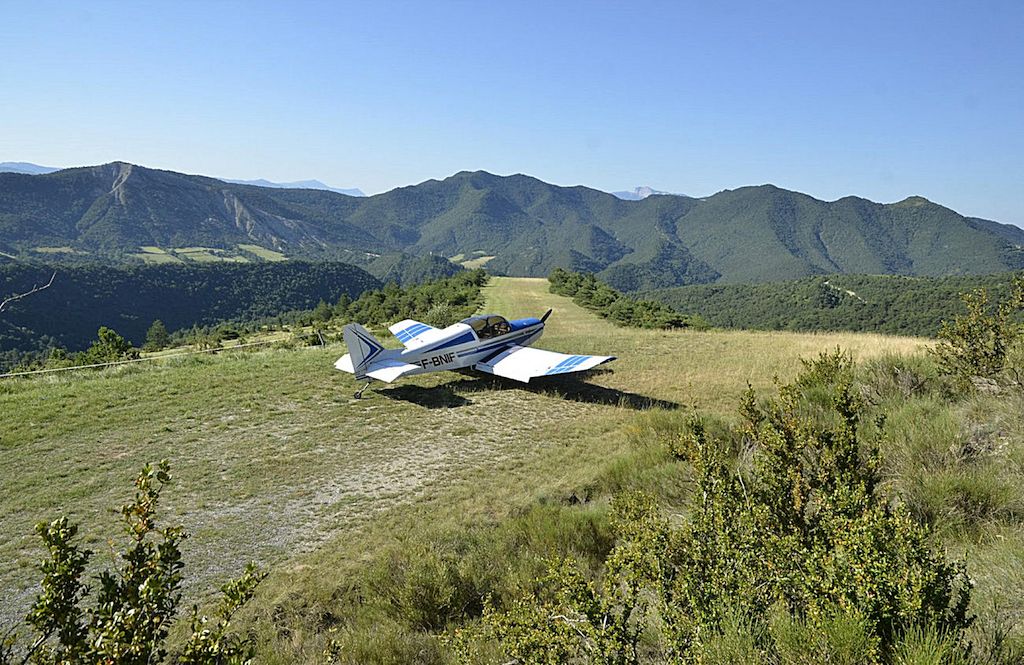
Mountain airstrips
In addition to altiports, France allows mountain airstrips (altisurfaces) to be created. An altisurface is a mountain landing strip for aeroplanes other…
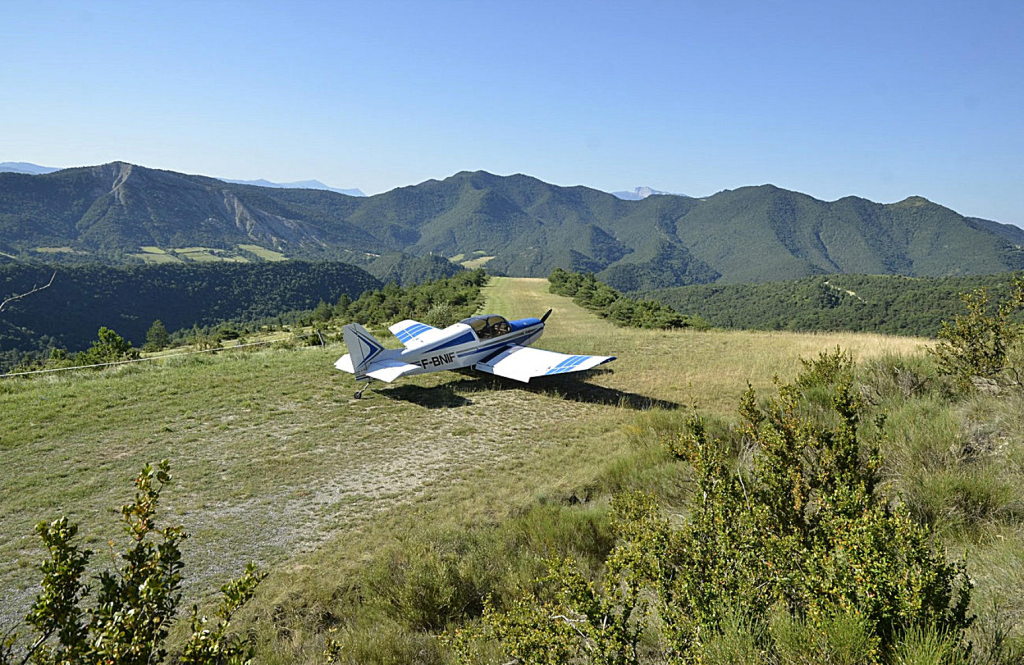
Mountain flying
on wheels
A break at Notre-Dame de la Salette. Careful, the wind is picking up! Escoulin.
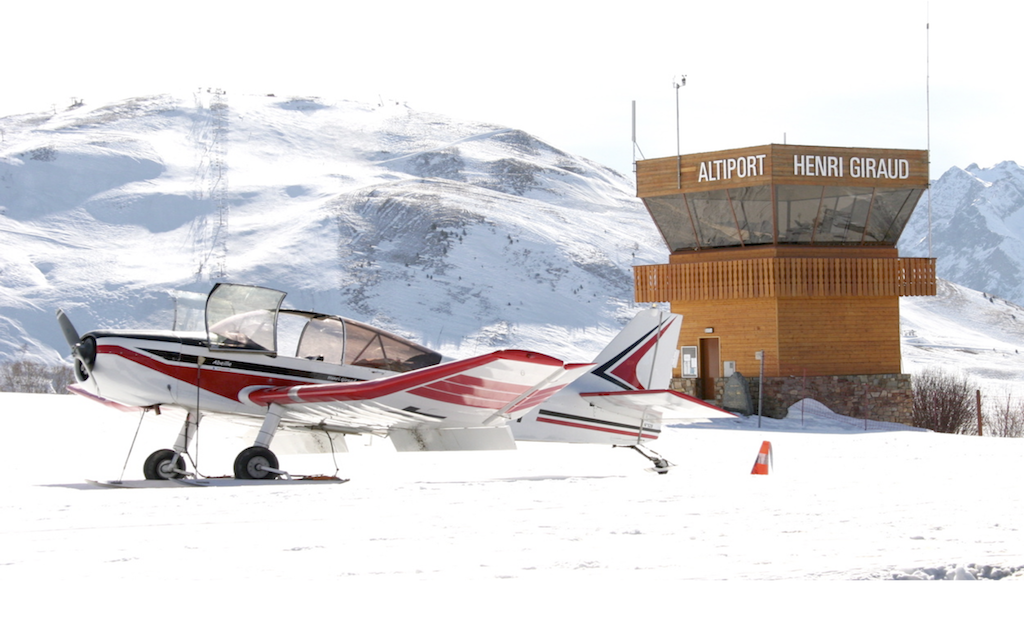
Mountain flying
on skis
The snow rating takes a little time, because there are many more things to take into account than on wheels. For example, you have to remember to…